
Volusia County Conservation Deals Protect Nearly 1,800 Acres as Florida Growth Accelerates
“For us, it’s about striking a balance.”
That comment from Daryl Carter, president of Maury L. Carter and Associates, gets to the heart of what is happening in Volusia County.
Florida continues to grow. People need homes, businesses need places to operate, and communities need room to expand. At the same time, every acre converted to development can change wildlife habitat, water systems, agriculture and the character of a place permanently.
That is why two recent Volusia County conservation transactions stand out.
Nearly 1,800 acres were taken off the market for future development through two purchases totaling more than $28 million. One of those transactions also established a new county record for the price paid per acre for a conservation easement.
To me, the bigger story is not simply the dollar amount. It is how Central Florida is increasingly using conservation easements, public funding and private landowners to preserve environmentally significant land without necessarily removing it from productive use.
Text Phil Kruse at 407-782-8276 or Contact Him Here
Key Takeaways
- Nearly 1,800 acres in Volusia County were protected through two conservation transactions valued at more than $28 million.
- An approximately 490-acre easement near De León Springs sold for $8.38 million and established a county record of $17,712 per acre for a conservation easement transaction.
- A second transaction secured roughly 1,300 acres at River Bend Ranch for $20.1 million.
- Funding came from programs including Volusia Forever and the state’s Florida Forever program.
- Conservation easements can prevent future development while allowing agriculture, forestry, cattle operations and other working-land uses to continue.
- The projects illustrate a wider Central Florida strategy of accommodating population and economic growth while preserving wildlife habitat, water resources and agricultural land.
Text Phil Kruse at 407-782-8276 or Contact Him Here
A Record-Setting Volusia County Conservation Easement
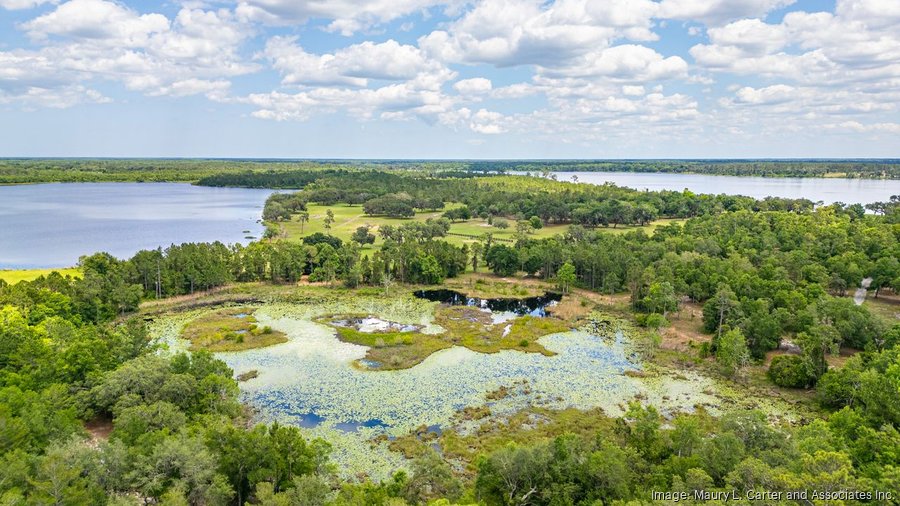
The first transaction involves approximately 490 acres in De León Springs, an unincorporated part of West Volusia County.
The property lies within the Longleaf Pine Ecosystem wildlife corridor and is bordered by Caraway Lake and Lake Dias.
The conservation easement was purchased for $8.38 million. According to the source material, that equals $17,712 per acre and represents the highest price per conservation acre ever paid in a Volusia County easement transaction.
The previous county record had been $12,505 per acre, established through the McMillion Creek Ranch transaction earlier in the year.
Those numbers show how valuable strategically located conservation land has become.
But conservation easements are different from a conventional land purchase.
What a Conservation Easement Actually Does
A conservation easement generally restricts certain future uses of a property most importantly development while allowing the land to remain privately owned and, depending on the agreement, economically productive.
That distinction matters in Florida.
The goal does not always have to be choosing between untouched wilderness and development. Easements can create a third option: keep environmentally important land open while continuing compatible activities such as farming, ranching or forestry.
That model is especially visible in the second Volusia County transaction.
River Bend Ranch Adds Another 1,300 Acres of Protected Land
During the same week, Volusia County secured another approximately 1,300 acres at River Bend Ranch for $20.1 million.
The property sits along the St. Johns River and directly adjoins the county-owned Deering Preserve at Deep Creek, which already contains 1,385 acres of conservation land.
Connecting conserved properties can be especially important because environmental value does not stop at property lines. Larger connected landscapes can support habitat, water resources and agricultural activity more effectively than isolated parcels.
The River Bend Ranch agreement is structured as a permanent forest and farmlands conservation easement.
Future development is restricted, but agricultural uses can continue. Those uses include cattle operations, tree cultivation and prescribed burning.
I think that detail is essential to understanding why conservation easements have become such an important part of Florida land policy: preservation does not automatically require ending the land’s productive role.
Volusia Forever and Florida Forever Make the Deals Possible
Large conservation transactions require large amounts of capital.
In this case, public conservation programs played a central role.
Volusia Forever began after county voters approved a 20-year tax plan in 2000 to permanently protect natural resources throughout the county.
For the approximately 490-acre De León Springs easement, the State of Florida contributed $8 million while Volusia County contributed roughly $379,000 through Volusia Forever.
That partnership allowed county conservation dollars to go much further.
The Florida Department of Environmental Protection also participates through Florida Forever, the state program that has become one of Florida’s major mechanisms for acquiring and protecting environmentally important land.
The source reports that Florida’s current and predecessor preservation programs have together acquired more than 2.6 million acres of natural land.
That scale helps explain why local-state partnerships matter. A county may identify land with high local conservation value, while state funding can supply much of the capital needed to protect it permanently.
Conservation Is Becoming Part of Florida’s Growth Strategy
Volusia County is not operating in isolation.
Central Florida continues to add residents, businesses and infrastructure. That puts pressure on land that may simultaneously have value for housing, agriculture, water protection, wildlife and recreation.
Conservation programs are increasingly being used alongside economic-development planning rather than treated as something separate from it.
That is an important shift.
When communities plan only for where development should happen, they are addressing half of the land-use question. They also need to identify where development should not happen.
Volusia County public information officer Clayton Jackson put the idea clearly in the source material: communities experiencing growth need to plan both for development and for environmentally significant land that should be preserved alongside it.
Conservation easements give governments one mechanism for doing that.
Preserved Land Can Produce Economic Value Too
It is easy to frame conservation as a cost because the purchase price is visible.
The benefits can be less obvious because many accumulate over decades.
According to the source material, land conservation can contribute economic value through tourism, employment, drinking-water filtration, healthcare benefits, natural-disaster mitigation and other ecosystem services.
Protected land can also reduce certain public expenses associated with stormwater management and water treatment.
Then there is agriculture.
A working-land conservation easement can preserve farming or cattle operations while preventing the property from later being converted into intensive development.
That helps explain why agricultural conservation has received significant state attention. Florida has directed hundreds of millions of dollars toward programs including the Rural and Family Lands Protection Program, which is designed to preserve agricultural land through conservation easements.
The result is a model where environmental protection and agricultural production do not have to be mutually exclusive.
A Bigger Central Florida Conservation Movement
The Volusia County transactions fit into a much larger pattern.
Recent conservation activity across Central Florida has included protected ranchland, wildlife-corridor acreage, wetlands, coastal habitat and agricultural property.
Volusia County previously acted to protect Double Eagle Ranch. Brevard County has added hundreds of acres through Florida Forever transactions while also preserving thousands of acres at Deer Park Ranch. Conservation projects have protected land connected to the Archie Carr Sea Turtle Refuge and additional working farmland within the Florida Wildlife Corridor.
Elsewhere in the region, Seminole and Osceola counties have also completed major preservation projects involving thousands of acres.
These deals differ in size, geography and purpose, but they point in the same direction: growth planning in Central Florida increasingly includes deciding which landscapes should remain undeveloped permanently.
Private Landowners Remain a Critical Part of the Equation
Government funding gets much of the attention in major conservation purchases, but these transactions also depend on private property owners willing to participate.
Maury L. Carter and Associates has become a major participant in that process.
Since 1989, the firm has sold more than 47,900 acres to government or conservation agencies in transactions worth more than $251 million. In Volusia County alone, the firm has sold more than 6,700 acres of conservation land for more than $68 million.
That history demonstrates how private real estate activity can intersect with conservation.
Carter’s argument is essentially that Florida needs both.
Development supports communities and economic activity. Conservation protects resources that growth can otherwise gradually consume.
And, in some cases, the two systems are financially connected. Revenue generated through real estate activity, including portions of documentary stamp taxes, can support state land preservation and restoration programs.
The Real Challenge Is Deciding What Florida Should Preserve Before It Is Gone
What stands out to me about these Volusia County conservation deals is their permanence.
Development decisions can reshape land for generations. Conservation easements also make a long-term decision but in the opposite direction.
They say that some places should remain forests, ranches, wetlands, wildlife corridors or working agricultural landscapes even as the communities around them continue to grow.
That does not eliminate the tension between conservation and development.
It creates a way to manage it.
As Florida continues attracting residents, companies and investment, the question will increasingly be not whether development happens, but where it happens and which natural and agricultural lands communities decide are too important to lose.
The nearly 1,800 acres recently protected in Volusia County offer one answer.
They show how local voters, state programs, landowners and conservation agencies can work together to preserve land while allowing Florida’s economy and communities to keep evolving.
If you live or do business in a fast-growing Florida community, take a look at the conservation programs operating in your county. Find out which properties are being considered for protection, how conservation funding is being spent and how proposed development fits into the region’s long-term land-use plan.
And if you follow Florida growth, development or conservation issues, share your perspective: How should communities decide which land to develop and which land to protect permanently?
Text Phil Kruse at 407-782-8276 or Contact Him Here