
UCF’s $90M Roth Tower Is Built for More Than Football
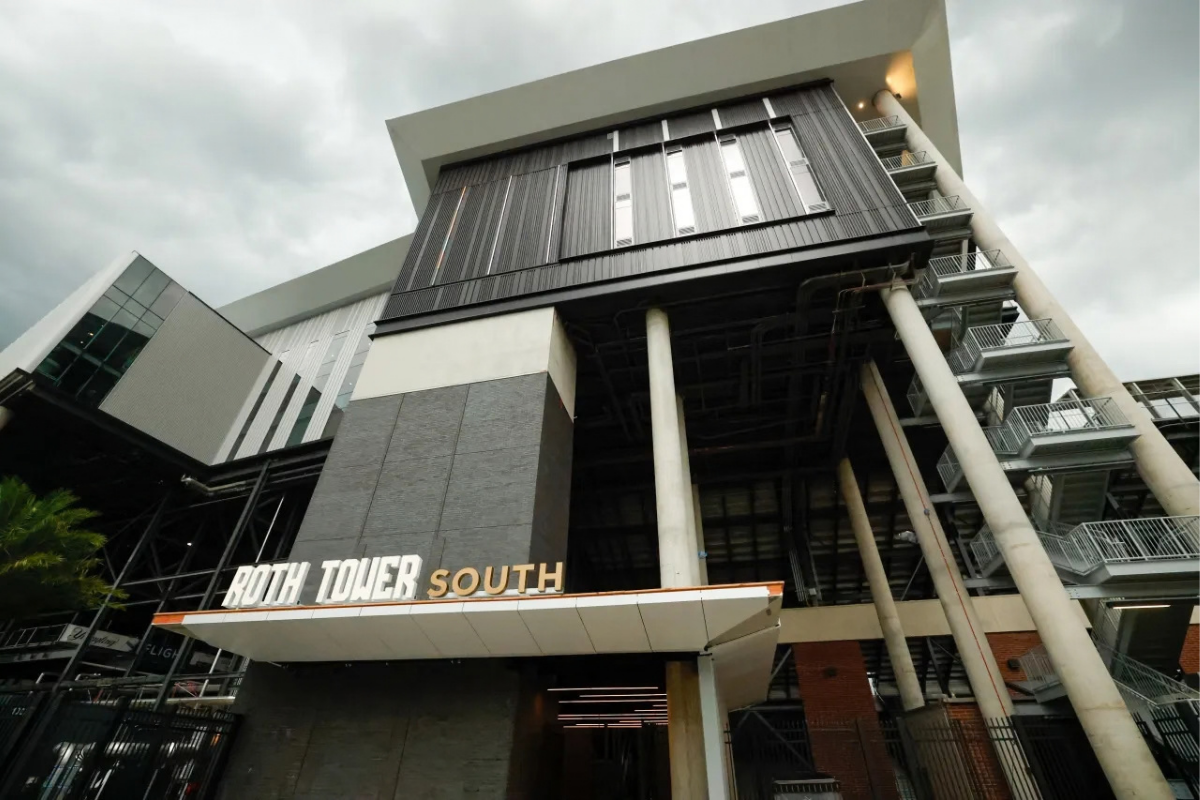
“We built this as an events space, and we’re programming it now as we speak.”
That comment from UCF Vice President and Director of Athletics Terry Mohajir may be the most important point to understand about the University of Central Florida’s new $90 million Roth Tower.
The 85,000-square-foot addition to Acrisure Bounce House is a major football upgrade, bringing luxury suites, outdoor sky suites, premium seating, modern broadcast facilities and significantly more hospitality space to the stadium.
But the larger story is what UCF is attempting to turn its football stadium into.
Rather than building a facility that delivers value during a handful of home football games and remains largely unused the rest of the year, UCF is positioning Roth Tower as a year-round events, hospitality, media and tourism asset.
That distinction could ultimately prove more valuable than the new seats themselves.
Text Phil Kruse at 407-782-8276 or Contact Him Here
Key Takeaways
- UCF invested roughly $90 million in Roth Tower at Acrisure Bounce House.
- The 85,000-square-foot facility is designed for football games and year-round private events.
- Roth Tower includes 28 luxury suites, 34 outdoor sky suites and more than 1,700 premium seats.
- The expanded club level grows from roughly 4,400 square feet to 15,650 square feet.
- New television and radio broadcast facilities could improve UCF's ability to host nationally televised games.
- UCF is targeting additional revenue from corporate events, weddings, proms and other gatherings.
- The project was supported by Orange County Tourist Development Tax funding.
- UCF is pursuing another $119 million for athletics broadcast upgrades and renovations to other sports facilities.
Text Phil Kruse at 407-782-8276 or Contact Him Here
The UCF Roth Tower Is Really a Revenue Platform
When universities announce major stadium projects, much of the attention naturally goes to luxury seating.
There is plenty of that at Roth Tower.
The facility includes 28 traditional luxury suites, all of which were sold ahead of opening, along with 34 outdoor sky suites and more than 1,700 premium seats.
However, premium seating is only one part of the business model.
UCF designed the tower so multiple events can potentially operate simultaneously. Corporate meetings, receptions, weddings, proms and other private gatherings can use the facility throughout the calendar year.
That is significant because stadium economics have traditionally been constrained by the athletic schedule.
A football stadium might be packed on Saturday and nearly dormant several days later.
UCF is trying to change that equation.
Going From Seven Games to 365-Day Utilization
Roth Tower reflects a broader trend in sports facility development: maximizing revenue per square foot rather than simply maximizing seating capacity.
The traditional question was:
How many more fans can fit inside the stadium?
The newer question is:
How many different ways can the facility generate revenue throughout the year?
UCF's answer includes:
- Football tickets
- Luxury suites
- Premium seating
- Corporate hospitality
- Private events
- Sponsorship opportunities
- Food and beverage spending
- Tourism-related events
- Broadcast exposure
That approach could make the tower more valuable than a traditional stadium expansion that simply adds several thousand conventional seats.
Premium Seating Is Becoming a Bigger Part of College Football Economics
One of the most noticeable elements of the project is UCF's emphasis on premium experiences.
The university is not simply selling a better view of the field.
It is selling access, convenience, hospitality and exclusivity.
The 34 outdoor sky suites are marketed as a semi-private luxury seating concept. Each accommodates up to 12 guests.
Season pricing is listed at $40,000, while single-game pricing is $7,500.
Amenities include refrigerators, storage, charging stations, food, nonalcoholic beverages, suite attendants, televisions, private restrooms and access to an upscale cash bar.
There is also a VIP package priced at $10,000 per game, including benefits such as parking, a dedicated host, a pregame tailgate experience, locker room access and field access.
Why Premium Experiences Matter
The economics behind premium seating are relatively straightforward.
A university can generate significantly more revenue from a relatively small number of premium customers than it can by simply adding another block of conventional seats.
Premium inventory also creates opportunities to build deeper relationships with:
- Alumni
- Corporate partners
- Donors
- Sponsors
- Community leaders
- Prospective business partners
That makes spaces like Roth Tower both hospitality products and relationship-building tools.
UCF Is Also Competing for Broadcast Exposure
One of the less flashy parts of the project could still have a major impact.
Roth Tower includes a modernized press box level with expanded booths for television and radio networks.
That matters because television exposure has become increasingly important in college athletics.
A stadium that can better accommodate major broadcast crews may become more attractive for nationally televised games.
National broadcasts can provide UCF with something more difficult to quantify than suite revenue: exposure.
Greater television visibility can influence brand awareness, recruiting, sponsorship opportunities and the national profile of the athletic department.
For a university that has grown aggressively during the past several decades, that exposure aligns with UCF's broader ambitions.
The $90 Million Project Also Ties Into Orlando Tourism
The financing behind Roth Tower is another important part of the story.
Orange County approved Tourist Development Tax funding for the project. Those revenues come from a 6% tax on hotel stays and other short-term rentals in the county.
That means UCF's argument for the facility extends beyond athletics.
The university is effectively making the case that its events generate tourism activity that benefits the broader Orlando economy.
Visiting football fans stay in hotels.
They eat at restaurants.
They rent cars.
They visit attractions.
And they spend money throughout Central Florida.
That economic activity could extend beyond football if UCF succeeds in attracting additional events to campus.
Visiting Fans Can Become an Economic Development Asset
The BYU game provides a useful example.
BYU athletics officials indicated that roughly 7,000 to 8,000 Cougar fans traveled to Orlando for a previous matchup and expected another substantial turnout.
That represents more than attendance inside Acrisure Bounce House.
Thousands of visiting fans can translate into thousands of hotel nights, restaurant meals and other tourism purchases.
Orlando also has an advantage that many traditional college towns do not: visitors already have numerous reasons to turn a football weekend into a longer trip.
Theme parks, entertainment, convention infrastructure and a large hospitality industry make Central Florida particularly well suited to sports tourism.
UCF can potentially tap into that existing tourism ecosystem.
Roth Tower Connects Football With UCF’s Space Identity
The design also attempts to make the building distinctly UCF.
Rather than creating another generic premium stadium tower, UCF incorporated themes connected to Central Florida and the university's relationship with America's space program.
Areas within the facility carry names including:
- Mercury
- Gemini
- Apollo
- Galaxy Club
That branding gives the building a stronger connection to UCF's history and identity.
It also matters from a marketing perspective.
Premium spaces can be more effective when they feel like destinations rather than simply expensive rooms overlooking a football field.
UCF Isn't Finished Investing in Athletics
Roth Tower may be the centerpiece of UCF's current athletics development, but it is not intended to be the final project.
The university is seeking another $119 million for improvements that could include upgraded broadcast and production capabilities along with renovations to softball, soccer, and track and field facilities.
The common thread is event attraction.
Better venues can make UCF more competitive when pursuing tournaments, championships, televised competitions and other events.
That could create a reinforcing cycle:
better facilities → more events → more visitors → more exposure → more revenue opportunities
Whether those investments ultimately produce the expected returns will depend on utilization, event demand and operating economics.
But the overall strategy is clear.
UCF is not thinking about its athletic facilities only as places where its teams compete.
It is increasingly treating them as infrastructure.
Why Roth Tower Could Become a Model for Stadium Development
One of the most significant aspects of Roth Tower is not the number of luxury suites or even the $90 million price tag.
It is the underlying philosophy.
College athletics facilities are increasingly being asked to accomplish several things simultaneously.
They need to improve the fan experience.
They need to generate revenue.
They need to support recruiting.
They need to accommodate media partners.
They need to attract sponsors.
And increasingly, universities and public officials want them to produce economic activity beyond game day.
Roth Tower appears designed around all of those objectives.
That does not guarantee success. A year-round event strategy only works if organizations consistently book the building and generate enough revenue to justify the investment.
That is what will make UCF worth watching.
The university has effectively made a bet that the future of college sports facilities is not simply about bigger stadiums.
It is about more productive stadiums.
What to Watch Next
The real test of Roth Tower will come after the ribbon cuttings and opening-week excitement are over.
One major metric will be how frequently UCF books the building outside football season.
Another will be how quickly the remaining premium inventory sells and what kinds of corporate and private events the university attracts.
The tourism argument will also be important.
If UCF can demonstrate that major athletic events consistently generate measurable hotel stays, visitor spending and regional exposure, it could strengthen the university's case for future public investment in sports infrastructure.
And with another $119 million in athletic improvements already being pursued, that conversation is only beginning.
What do you think? Can college stadiums realistically become year-round event and economic development assets, or should universities be more cautious about major facility investments?
For communities evaluating their own stadiums and arenas, the most important question may no longer be how many people those venues can seat.
It may be how many days a year they create value.
Text Phil Kruse at 407-782-8276 or Contact Him Here