
Orange County’s $1.1 Billion Hotel Tax Question: How Much Can It Really Afford?
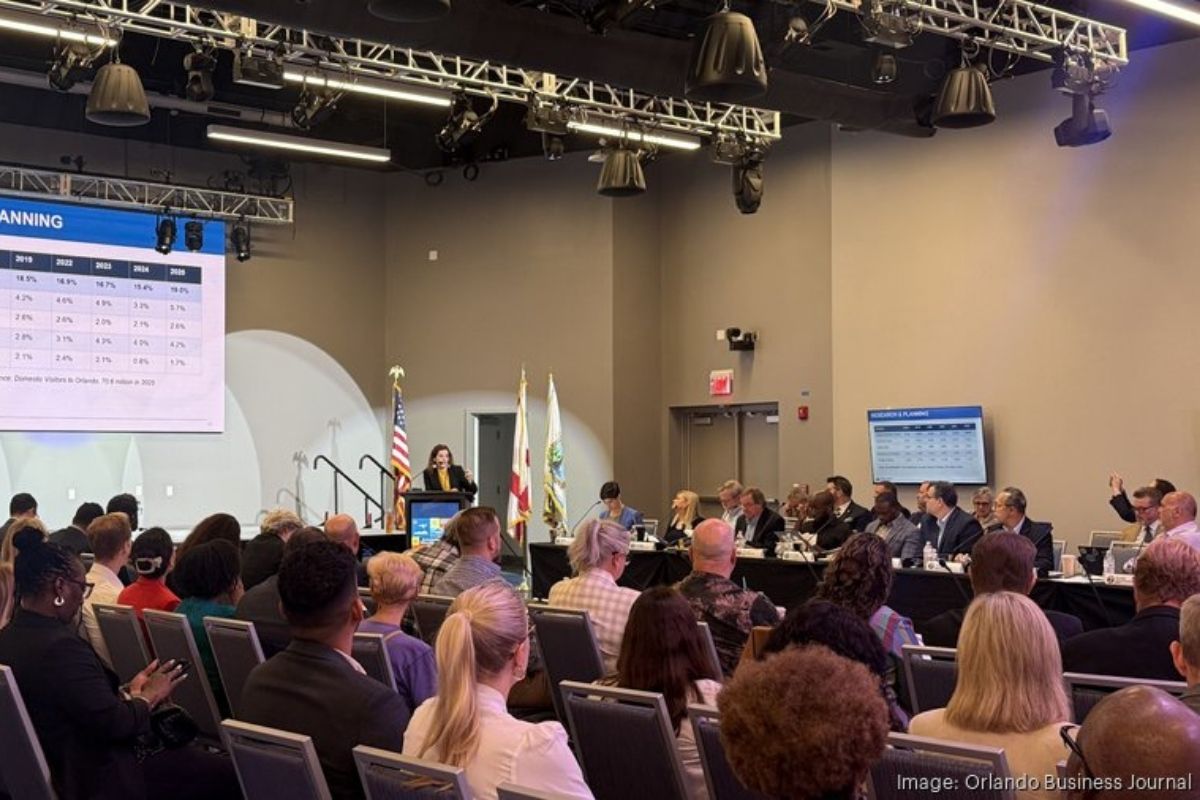
“Funding all the projects … is not within the county’s estimated capacity while maintaining the target reserve level.”
That line gets right to the heart of Orange County’s latest debate over Tourist Development Tax spending.
County commissioners have now accepted recommendations covering at least $1.1 billion in arts, cultural, recreational and tourism-related projects. But accepting the recommendations is not the same thing as writing the checks.
Now comes the harder part: deciding how much Orange County can responsibly fund, which projects move first, and whether some of the biggest requests need to be reduced or phased over time.
To me, that is the real story here.
This is no longer simply a conversation about which projects sound worthwhile. It is a conversation about how Orange County balances ambitious tourism investments with the need to protect its financial reserves.
Text Phil Kruse at 407-782-8276 or Contact Him Here
Key Takeaways
- Orange County commissioners accepted a task force report recommending at least $1.1 billion in Tourist Development Tax-funded projects, but the recommendations are non-binding.
- County financial staff said funding all 12 projects at the requested amounts and on the requested schedules would exceed estimated capacity while maintaining the county’s target reserve.
- The Dr. Phillips Center for the Performing Arts is requesting $750 million toward a $1.4 billion master plan, making it by far one of the most consequential funding decisions.
- County officials are considering alternatives including smaller awards, delayed allocations and phased funding.
- Ecotourism and cultural tourism emerged as major priorities, including proposed investments in natural tourism assets and arts and culture programs.
- Orange County is budgeting approximately $400 million in Tourist Development Tax collections for fiscal year 2026-2027, compared with $384.6 million collected in fiscal year 2025.
Text Phil Kruse at 407-782-8276 or Contact Him Here
What Orange County Actually Approved
The Orange County Board of County Commissioners took an important procedural step when it accepted the final report from the Tourist Development Tax Citizen Advisory Task Force.
The report recommends investing at least $1.1 billion across 12 projects using revenue generated by the county’s 6% tax on hotel stays and other short-term rentals.
But there is an important distinction here.
The county did not approve $1.1 billion in spending.
Accepting the report simply moves the process into its next phase. Commissioners still have to decide which projects receive funding, how much each receives and when those dollars become available.
That distinction matters because Orange County’s financial analysis suggests the county cannot simply fund every recommendation exactly as requested.
Why Tourist Development Tax Reserves Matter
One of the most important pieces of this discussion is also one of the least glamorous: reserves.
Orange County maintains Tourist Development Tax reserves so existing commitments can continue to be funded even if tourism revenue drops during an economic downturn.
In 2022, commissioners established a $300 million minimum reserve level.
County staff warned that paying for all 12 recommended projects at their requested amounts and schedules would not allow Orange County to maintain its target reserve.
That turns the debate into a balancing act.
Orange County can pursue major tourism-related investments, but doing so without sufficient reserves could reduce its flexibility if hotel-tax collections weaken in the future.
Mayor Jerry Demings indicated that he did not want the county to weaken its reserve requirements simply to accommodate the projects.
I think that makes the funding timeline almost as important as the total price tag.
Project Phasing Could Become the Key to Making the Numbers Work
One of the clearest options emerging from the county’s financial analysis is phasing.
Instead of giving every project its full requested amount immediately, commissioners could spread funding over longer periods or approve smaller allocations.
County staff examined scenarios involving only the top nine projects recommended by the task force.
Even that was not enough under some assumptions to maintain the desired reserves.
Another scenario reduced the amount going to the Dr. Phillips Center from its requested $750 million to $590 million.
That example shows how significant even one large project can be to the overall TDT funding plan.
The final capacity will depend on multiple variables, including the projects commissioners approve, the amounts awarded, the timing of those awards and the financing terms attached to projects supported with long-term debt.
In other words, there probably is not one magic number.
The county has several levers it can pull.
Why the Dr. Phillips Center’s $750 Million Request Is Getting So Much Attention
No project illustrates the scale of this decision better than the Dr. Phillips Center for the Performing Arts expansion.
The organization is seeking $750 million in Tourist Development Tax funding toward a broader $1.4 billion master plan.
That plan would include new theaters, a rooftop venue, a parking garage and other improvements, expanding the downtown campus from nine venues to 20.
Commissioner Mayra Uribe raised concerns about awarding the full $750 million.
Her argument introduces another important question: If the county reduces one enormous award, could that create room to support additional projects that did not make the task force’s final recommendations?
That could significantly reshape the discussion.
The Dr. Phillips Center, meanwhile, has indicated that receiving less than the full request would not necessarily stop the project.
President and CEO Kathy Ramsberger has said the organization intends to combine public funding with philanthropy and private investment, with the amount of TDT funding ultimately influencing which phases move forward and when.
That gives commissioners another option besides a simple yes-or-no decision.
They could fund part of the master plan now and leave later phases dependent on future financing.
Ecotourism and Cultural Tourism Are Emerging as Priorities
While the biggest dollar figures naturally attract attention, another important shift is happening inside Orange County’s tourism strategy.
Several highly ranked recommendations emphasize ecotourism and cultural tourism.
Demings specifically highlighted those areas as investments he was particularly interested in expanding, provided the county can afford them.
Among the recommendations is a proposed $25 million capital program for lakes, rivers, parks and other natural tourism assets.
The recommendations also include replenishing an annual grant program supporting arts- and culture-related projects.
That matters because it broadens the definition of tourism infrastructure.
Instead of focusing only on convention facilities, stadiums or traditional visitor attractions, Orange County is considering how its natural resources and cultural institutions can contribute to the visitor economy.
Not Every High-Profile Project Made the Cut
Another notable part of the task force report is what it did not recommend.
The final recommendations excluded several prominent proposals, including an expansion of the Orange County Convention Center and a stadium connected to the Orlando Dreamers’ effort to pursue a Major League Baseball franchise.
Meanwhile, three of the 12 recommended projects were left out of some preliminary county funding scenarios: a $54 million Florida Citrus Sports request, a $30 million proposal from the city of Ocoee and a $22.5 million request from Eatonville’s Community Redevelopment Agency.
That demonstrates how tight the funding equation already is.
Even projects that successfully made the recommendation list are not guaranteed funding.
Orange County Has Strong Tourism Revenue but Choices Still Have to Be Made
Orange County expects to collect about $400 million in Tourist Development Tax revenue during fiscal year 2026-2027.
The county collected $384.6 million during fiscal year 2025.
Those are substantial numbers.
But annual tax collections do not translate directly into hundreds of millions of dollars of immediately available money for new projects. Orange County already has obligations, reserve requirements and other tourism-related commitments to consider.
That is why the $1.1 billion headline only tells part of the story.
The more important questions are how much funding is available over time, how much debt the county is willing to use and how aggressively commissioners want to commit future TDT revenue.
The Bigger Question Is How Orange County Prioritizes Growth
I see this debate as something bigger than a collection of individual funding requests.
Orange County is effectively deciding what its next generation of tourism investment should look like.
Should more hotel-tax revenue support performing arts?
Should natural attractions receive more investment?
How much should go toward major capital projects versus smaller programs?
And how much financial flexibility should Orange County preserve for whatever comes next?
Those questions will become more important as commissioners begin turning a non-binding recommendation into actual funding decisions.
The county has already established that it cannot simply approve everything exactly as proposed.
Now the real prioritization begins.
If you live, work or do business in Central Florida, this is a funding conversation worth following. Look beyond the $1.1 billion headline and watch the decisions around phasing, reserves, project size and tourism strategy. Those choices will reveal far more about Orange County’s long-term priorities than the recommendation list alone.
What would you prioritize: major cultural projects, ecotourism investments, smaller community projects or stronger financial reserves? Share your perspective and pay attention to the next commission discussion, because that is where recommendations begin turning into real spending decisions.
Text Phil Kruse at 407-782-8276 or Contact Him Here