
Florida Flying Cars Could Be Closer Than You Think: Inside the State’s eVTOL Air Taxi Plan
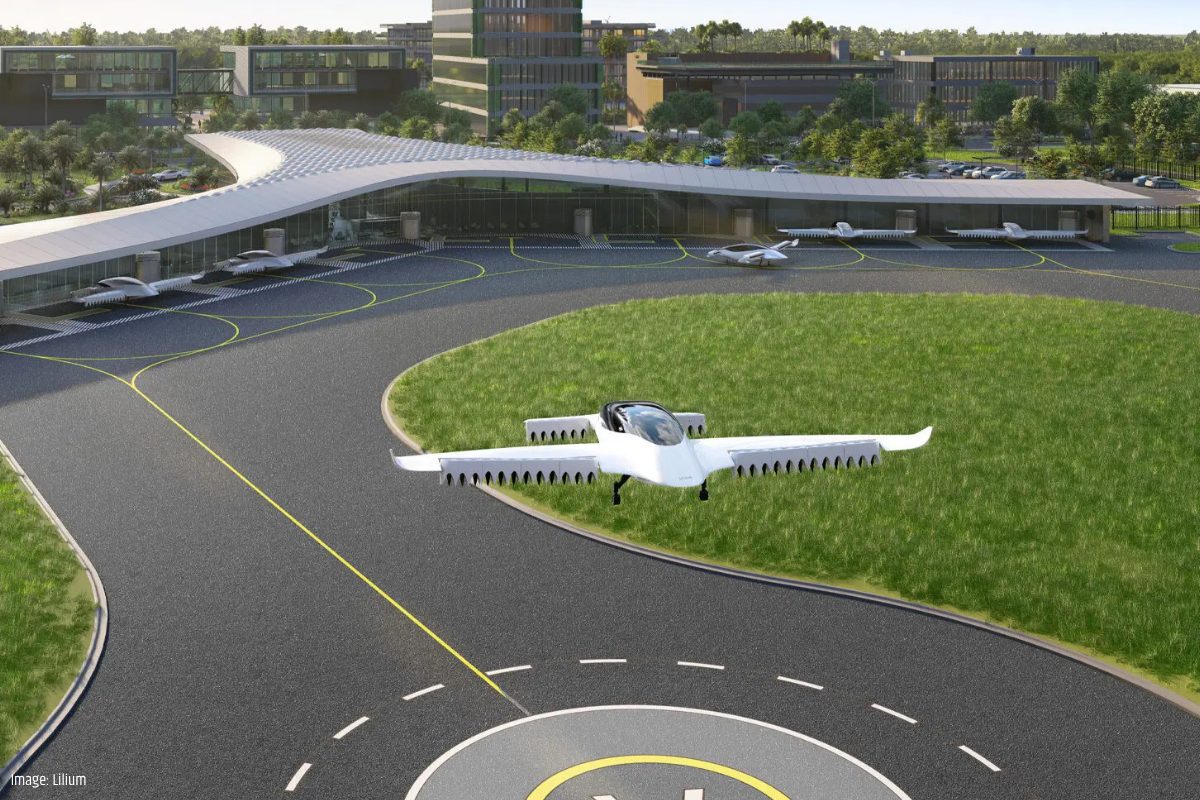
_“You could start to see taxi service with these vertical lift platforms probably within the next year.”_
That comment from Florida Gov. Ron DeSantis immediately raises the possibility that flying taxis could soon move from futuristic concept to real-world transportation.
But Florida’s push into advanced air mobility involves much more than simply putting flying cars in the sky.
The state is developing testing facilities, proposed aerial corridors, vertiports, workforce-training programs and partnerships with federal regulators and aircraft manufacturers. Together, those efforts could position Florida as one of the country’s leading test beds for electric vertical takeoff and landing aircraft, or eVTOLs.
Florida plans to begin testing eVTOL aircraft at the state-owned SunTrax facility in Polk County by the end of 2026. The 775-acre site is expected to play a central role in developing operational standards, collecting data and helping regulators understand how the aircraft could safely operate at scale.
At the same time, Florida is working with the Federal Aviation Administration to develop the regulatory and operational frameworks that will be needed before widespread passenger air-taxi service can begin.
The result is a transportation experiment that could have implications far beyond Florida.
Text Phil Kruse at 407-782-8276 or Contact Him Here
Key Takeaways
- Florida plans to test eVTOL aircraft at SunTrax in Polk County by the end of 2026.
- Gov. Ron DeSantis has said passenger air-taxi service could begin within roughly a year, although that is not a confirmed commercial launch date.
- Florida is working with the FAA on regulatory and operational frameworks for advanced air mobility.
- FDOT envisions an eventual network of aerial transportation corridors connecting major Florida cities.
- Embry-Riddle Aeronautical University and Polk State College are helping develop research and workforce-training programs.
- Potential uses extend beyond passenger transportation to cargo, medical transport, law enforcement and emergency response.
Text Phil Kruse at 407-782-8276 or Contact Him Here
Florida Is Building More Than a Flying Car Test Track
The centerpiece of Florida’s strategy is SunTrax in Auburndale, located near the Interstate 4 corridor between Tampa and Orlando.
The Florida Department of Transportation originally developed the site to support testing of autonomous and connected vehicles. It is now being expanded to support advanced air mobility research and eVTOL testing.
That gives aircraft developers and transportation officials a controlled environment for evaluating aircraft systems, communications technology, operational procedures and infrastructure.
Testing the aircraft themselves is only one part of the challenge.
Before flying taxis can become a routine mode of transportation, regulators and operators must determine how passengers will board, where aircraft will land, how batteries will be charged, how flights will interact with conventional aviation and how emergency procedures will be handled.
Those operational questions are among the most important issues Florida hopes to address through SunTrax.
Could Florida Really Have Flying Taxis Within a Year?
DeSantis has suggested that Florida could begin seeing taxi service using vertical-lift aircraft within roughly a year.
That timeline is ambitious.
There is an important distinction between beginning aircraft testing and launching widespread commercial passenger service.
Testing at SunTrax could begin relatively quickly, while commercial operations would still depend on aircraft certification, FAA approvals, infrastructure development, operating rules and individual company readiness.
For that reason, the next year is more likely to be a critical period for testing and regulatory development than an immediate transformation of Florida transportation.
Even so, the move toward real-world testing represents a significant step for an industry that has spent years developing prototypes and demonstrating aircraft capabilities.
Skipping I-4 Could Become a Major Use Case
Central Florida offers an obvious example of where air taxis could potentially provide value.
A passenger landing at Tampa International Airport and traveling to Orlando-area attractions such as Walt Disney World or Universal Orlando currently faces a lengthy drive along Interstate 4.
An eVTOL aircraft could theoretically bypass highway congestion and travel directly between designated landing facilities.
That type of route illustrates one of the strongest potential use cases for advanced air mobility.
Rather than replacing automobiles entirely, eVTOL aircraft could serve routes where traffic congestion, distance or geography makes ground transportation particularly inefficient.
Airport connections, regional travel, medical transportation and emergency response could therefore become some of the earliest practical applications.
Florida’s Proposed “Aerial Highway”
Florida’s ambitions extend well beyond Tampa and Orlando.
FDOT has outlined a phased concept for an interconnected advanced-air-mobility network linking cities throughout the state.
Phase 1
The initial phase includes several major corridors:
- Central Florida and the I-4 corridor, including St. Petersburg, Clearwater, Tampa, Sarasota, Lakeland, Auburndale, Kissimmee, Orlando, Cocoa, Melbourne and Daytona Beach.
- Port St. Lucie to Miami, with stops including Stuart, West Palm Beach, Fort Lauderdale and Miami.
- Southwest Florida and the Florida Keys, including Fort Myers, Naples, Homestead, Marathon and Key West.
- Pensacola to Tallahassee.
Phase 2
A later expansion could include:
- Daytona Beach to Jacksonville.
- Additional routes around Sebring.
- Orlando and Tampa connections toward Gainesville, Lake City and Tallahassee.
- Jacksonville to Tallahassee.
The concept resembles a transportation network rather than a conventional roadway.
Aircraft would travel between airports, vertiports and other approved landing locations. Over time, commercial property owners could potentially add compatible charging and landing infrastructure of their own.
That expansion would be essential if eVTOL transportation is ever going to move beyond isolated demonstration routes.
The FAA Will Play a Critical Role
Florida can build facilities and propose aerial corridors, but the national aviation system is regulated at the federal level.
That makes the FAA one of the most important players in determining how quickly advanced air mobility can develop.
Regulators must establish how eVTOL aircraft will operate alongside commercial airplanes, helicopters and other aircraft.
They must also address issues involving air traffic management, pilot requirements, aircraft certification, communications technology and operational safety.
Testing conducted in Florida could therefore contribute to broader national rules and standards.
That means the significance of Florida’s program could extend well beyond the state’s borders.
Embry-Riddle Is Studying the Infrastructure Behind the Aircraft
Embry-Riddle Aeronautical University is playing a major role in Florida’s advanced air mobility research.
Research projects are examining issues such as passenger security screening, terminal design, air traffic management, communications systems and aircraft technology.
Those questions may ultimately be just as important as aircraft performance.
A commercially viable air-taxi network requires an entire support system.
Aircraft need landing areas.
Passengers need terminals.
Operators need charging equipment.
Air traffic managers need reliable communications.
Emergency services need clearly defined procedures.
The success of eVTOL transportation will therefore depend on how well those systems work together.
Florida Will Need an Entire New Workforce
Advanced air mobility could also create demand for new technical and aviation careers.
Florida is partnering with Embry-Riddle Aeronautical University and Polk State College to develop training and credentialing opportunities related to eVTOL operations.
Potential career fields could include:
- Pilots
- Aircraft maintenance technicians
- Aerospace engineers
- Electrical engineers
- Software developers
- Air traffic and airspace-management specialists
- Vertiport operators
- Transportation planners
- Emergency-response professionals
Developing that workforce early could help Florida attract aircraft manufacturers and operators looking for locations to establish production, testing and commercial operations.
Air Taxis Are Only One Part of the Opportunity
The term “flying car” attracts attention, but passenger transportation is only one potential application for eVTOL aircraft.
Florida officials have also highlighted uses involving medical transportation, disaster response, law enforcement, cargo delivery and military operations.
Some of those applications could become viable before mass-market passenger service.
Emergency-response agencies, for example, may place significant value on reaching an area quickly without relying on congested roads.
Medical operators could use aircraft to move patients, organs or critical supplies.
Cargo companies could potentially use eVTOLs for time-sensitive deliveries.
Those applications may provide a practical path toward broader adoption while manufacturers continue working to lower operating costs.
Affordability Could Determine Whether Flying Taxis Go Mainstream
One of the biggest unanswered questions is cost.
DeSantis said he asked eVTOL company executives whether the aircraft could eventually become affordable for the average person.
According to his comments, industry leaders believe that may be possible as the technology scales.
But affordability will depend on several factors.
Aircraft production costs will need to fall.
Battery systems will need to become more efficient.
Operators will need high aircraft utilization.
Vertiport networks will need to grow.
Regulatory requirements will also affect operating expenses.
Early air-taxi services may therefore resemble premium transportation before becoming something closer to everyday mobility.
The Real Challenge Is Building the Ecosystem
Electric vertical-lift aircraft have already demonstrated that they can fly.
The larger question is whether an entire transportation ecosystem can be built around them.
Manufacturers must produce aircraft at scale.
Airports and property owners must develop landing infrastructure.
Utilities must support charging demand.
Regulators must establish operating rules.
Schools must train pilots and technicians.
Passengers must also be willing to use the service at a price that makes economic sense.
Those challenges explain why Florida’s current efforts are significant.
The state is not simply testing aircraft.
It is testing whether all the pieces required for advanced air mobility can work together.
Florida Could Become a Major Test Case for Advanced Air Mobility
Florida is attempting to create an environment where the advanced air mobility industry can develop.
SunTrax provides a testing environment.
The FAA provides regulatory oversight.
Universities provide research and workforce development.
Aircraft manufacturers provide the technology.
Airports and commercial properties could eventually provide the network of landing sites.
If those pieces come together, Florida could become one of the country’s most important proving grounds for eVTOL transportation.
That does not mean hundreds of flying taxis will suddenly appear over Interstate 4 within the next year.
It does mean the transition from concept to real-world testing is accelerating.
The aircraft will attract most of the attention, but the regulations, infrastructure, workforce programs and vertiports being built around them may ultimately determine whether flying taxis become a meaningful part of Florida’s transportation system.
Would an air taxi between Tampa and Orlando be worth using if it meant avoiding Interstate 4? The answer may depend less on the technology than on price, convenience and how quickly Florida can build the network around it.
Text Phil Kruse at 407-782-8276 or Contact Him Here