
Bishop Moore Catholic High School Breaks Ground on $21 Million Arts Center in Orlando
“Rising enrollment has placed significant pressure on our facilities.”
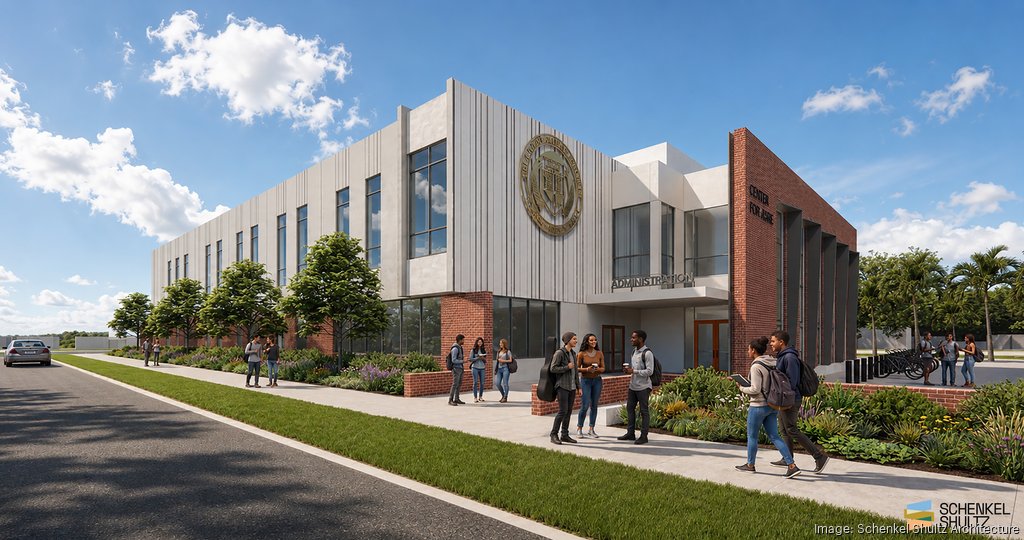
Bishop Moore Catholic High School is investing more than $21 million in a new Center for the Arts as the Orlando private school expands its academic programs and responds to increasing student enrollment.
The 28,500-square-foot facility, located at 3821 Edgewater Drive in Orlando, will feature a 200-seat theater, specialized arts classrooms, creative studios, and exhibition spaces. The project represents a significant investment in arts education and campus infrastructure in Central Florida.
The expansion also reflects a broader trend among private schools investing in modern facilities to accommodate enrollment growth, enhance educational opportunities, and strengthen their competitive position.
Text Phil Kruse at 407-782-8276 or Contact Him Here
Key Takeaways
- $21 million investment: Bishop Moore Catholic High School has begun construction on a new Center for the Arts in Orlando.
- 28,500-square-foot facility: The building will feature a 200-seat theater, performing arts classrooms, visual arts studios, and a student gallery.
- Enrollment growth: Bishop Moore has approximately 1,600 students, up from 1,391 in fall 2024.
- Expanded academic programs: Relocating arts programs will create additional classroom space for new academic initiatives, including a proposed law program.
- Capital campaign funding: The Imagine Moore campaign has raised more than $5 million toward construction.
- Regional development trend: Other Central Florida private schools are pursuing major investments in arts, athletics, and educational infrastructure.
Text Phil Kruse at 407-782-8276 or Contact Him Here
Bishop Moore Catholic High School Expands Arts Education
Bishop Moore Catholic High School officially began construction on its new Center for the Arts in August 2026, following the issuance of city permits on August 3.
The project was designed by Schenkel Shultz Architecture, with Williams Co. serving as construction manager.
The new building will address growing demand for dedicated instructional spaces across the school's performing and visual arts programs.
Currently, Bishop Moore's fine arts department operates within four shared classrooms. As enrollment increases, these existing facilities have become insufficient to support student participation and graduation requirements.
Every Bishop Moore student must complete a performing or fine arts credit, making expanded arts facilities an important component of the school's long-term educational strategy.
What Will the New Center for the Arts Include?
The 28,500-square-foot facility will provide dedicated spaces for a variety of artistic disciplines, including:
- Performing arts: Classrooms and rehearsal spaces for dance, drama, choir, and orchestra.
- Visual arts: Studios for drawing, painting, sculpture, and ceramics.
- Digital media: Specialized facilities for photography and digital arts education.
- Theater: A 200-seat performance venue for student productions and school events.
- Student exhibitions: A lobby featuring a gallery for student artwork.
- Campus operations: A welcome center and administrative spaces.
The investment will give students access to purpose-built environments designed to support creative expression, technical skill development, and collaborative learning.
It will also provide additional on-campus performance capacity for arts programming that currently uses the Dr. Phillips Center for the Arts.
Growing Enrollment Drives Campus Expansion
Bishop Moore's investment comes amid significant enrollment growth.
Founded in 1954, the school is Orlando's largest private high school and Central Florida's second-largest private school, according to Orlando Business Journal research.
Enrollment has increased from 1,391 students in fall 2024 to approximately 1,600 students, representing growth of roughly 15%.
This increase has placed additional pressure on classroom availability and existing campus facilities.
The Center for the Arts is intended to address those challenges while supporting the school's expanding academic offerings.
New Arts Building Creates Space for Additional Academic Programs
Beyond supporting fine arts education, the project will allow Bishop Moore to repurpose existing space in Bishop Dorsey Hall.
Moving arts programs into the new facility will free classrooms for additional instructional uses.
One proposed initiative is a law program designed to introduce students to legal careers and related academic disciplines.
Potential opportunities include:
- Moot court competitions
- Speech and debate programs
- Legal career exploration
- Expanded classroom instruction
This approach allows the school to address immediate space constraints while creating opportunities for broader academic development.
The project demonstrates how specialized educational construction can support multiple campus priorities by improving the use of existing facilities.
Funding the $21 Million Center for the Arts
The new facility is being supported through Bishop Moore's Imagine Moore capital campaign.
The campaign has raised more than $5 million, with longer-term contributions and financing expected to provide the remaining approximately $16 million.
This funding strategy reflects the role of private donations, institutional fundraising, and financing in supporting major campus improvements.
For private educational institutions, capital campaigns can provide important financial support for specialized facilities that extend beyond traditional classroom construction.
As of the August 24, 2026 announcement, a projected completion date for the Center for the Arts had not been disclosed.
Central Florida Private Schools Invest in Modern Facilities
Bishop Moore's expansion is part of a wider pattern of capital investment among Central Florida private schools.
Lake Highland Preparatory School is also pursuing major campus improvements through its Elevate Highlanders campaign.
One proposed initiative includes a more than $9 million arts district designed to expand facilities for programs currently operating in converted classrooms.
Although construction on that arts district had not been scheduled, Lake Highland has moved forward with another major campus project.
In May 2026, the school held a ceremonial groundbreaking for the Orlando Health Jewett Orthopedic Institute Athletic Center and Bray Family Field.
The development includes a 48,000-square-foot athletic facility and a full-sized lighted turf field.
These projects highlight how private educational institutions are investing in specialized spaces for arts, athletics, and student development.
Why Modern Educational Facilities Matter
New educational facilities can serve several purposes beyond increasing a school's physical capacity.
Purpose-built classrooms and studios support specialized instruction that may be difficult to provide in conventional teaching spaces.
Performing arts theaters, digital media studios, science laboratories, and athletic facilities can also broaden extracurricular opportunities and enhance the overall student experience.
Modern facilities may help private schools differentiate themselves in a competitive education market, particularly when families evaluate academic programs, campus resources, and extracurricular activities.
However, the long-term value of these investments ultimately depends on how effectively the facilities support teaching, learning, and student participation.
National Education Construction Growth Expected to Slow
While several Central Florida private schools continue making substantial capital investments, the national education construction market faces slower projected growth.
According to the American Institute of Architects (AIA), education construction spending is forecast to increase:
- 1.5% in 2026
- 1.1% in 2027
The AIA identifies immigration policy, reduced federal funding, and changing population demographics as factors constraining construction growth.
Population projections cited by the organization indicate that the United States could experience significant declines in several school-age demographic groups between 2025 and 2035.
Projected national declines include:
| Age group | Projected population decline | | --- | --- | | Ages 5–9 | 600,000 | | Ages 10–14 | 1.5 million | | Ages 15–19 | 1.9 million | | Ages 20–24 | 1 million |
These shifts could limit demand for new educational construction in certain markets while increasing opportunities for renovations, expansions, and modernization of aging facilities.
What This Means for Central Florida's Construction Industry
Despite national demographic challenges, individual schools and regional markets may continue to experience enrollment increases.
Bishop Moore's expansion demonstrates how local demand can create construction opportunities even when nationwide industry growth is slowing.
Specialized educational facilities also introduce technical and architectural requirements that distinguish them from conventional classroom buildings.
Performing arts centers often require careful consideration of acoustics, lighting, rehearsal environments, theater infrastructure, and adaptable instructional spaces.
These requirements can create opportunities for architecture, engineering, and construction firms experienced in educational and cultural facilities.
For Central Florida's construction industry, continued investment by private educational institutions represents a potential source of institutional development activity.
A Long-Term Investment in Orlando's Educational Infrastructure
Bishop Moore Catholic High School's new Center for the Arts represents more than an expansion of its fine arts department.
The project addresses enrollment-related space constraints, creates dedicated facilities for creative education, and allows existing campus buildings to accommodate additional academic programs.
Its development also illustrates how private schools can combine new construction with more efficient use of existing infrastructure.
As educational institutions respond to changing student needs and demographic trends, strategic campus improvements may become increasingly important.
For Bishop Moore, the $21 million investment is intended to provide the physical resources needed to support its growing student population and broaden educational opportunities.
Conclusion: Central Florida's Private School Construction Continues
Bishop Moore Catholic High School's 28,500-square-foot Center for the Arts is among the notable private school construction investments announced in Orlando in 2026.
With a 200-seat theater, dedicated arts studios, and expanded instructional facilities, the project is designed to strengthen the school's performing and visual arts programs while creating room for future academic growth.
Alongside developments at Lake Highland Preparatory School, the project highlights continued investment in educational infrastructure across Central Florida, despite slower national construction growth forecasts.
As private schools evaluate future campus investments, balancing enrollment growth, specialized educational programs, financing, and long-term facility needs will remain essential.
School administrators, developers, and construction professionals can look to projects such as Bishop Moore's Center for the Arts when considering how targeted facility investments can support broader institutional goals.
Text Phil Kruse at 407-782-8276 or Contact Him Here